The Physical Nature of Galaxy Morphology and Structure
The James Webb Space Telescope (JWST), with its exceptional resolution and sensitivity across the infrared spectrum, has paved the way for in-depth studies of galaxy morphology and structure in the distant Universe. This research is vital for unraveling the evolution of galaxy shapes and structures throughout cosmic history. The key research areas of this endeavor include:
1. Evolution of Hubble Types: This research probes the historical development of galaxy formation and the cosmic processes that have sculpted the universe. By examining the temporal changes in galaxy morphologies, We can uncover the prime movers of star formation, the significance of galactic mergers and accretion, and the pervasive effects of dark matter and cosmic feedback mechanisms.
2. Galaxy Mergers: JWST's high-fidelity imaging reveals intricate morphological features that are indicative of past or current mergers, such as tidal tails, dual nuclei, and galactic bridges. Assessing the prevalence and consequences of mergers across various redshifts is crucial for enhancing our cosmological understanding of galactic coalescence.
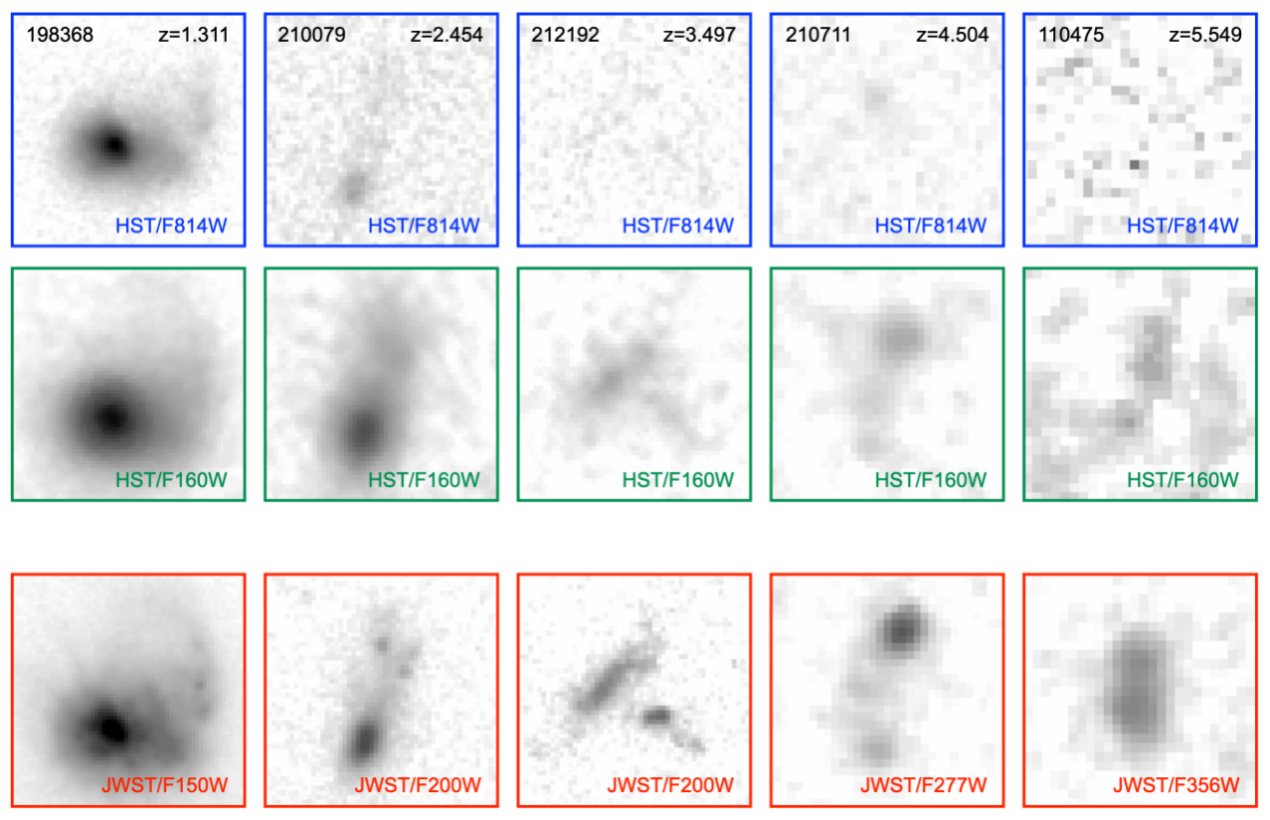
Figure 1. Merging galaxes with z>1 in the GOODS-S field.
3. Linking Galaxy Morphology to Physical Properties: The spectral emission of galaxies across different bands illuminates their intrinsic compositions and physical states. Analyzing morphologies at various rest-frame wavelengths allows us to dissect the spatial distribution of star formation, the presence of dust, and the layout of stellar masses. Additionally, this research delves into how internal galaxy dynamics and active galactic nuclei (AGN) influence morphological attributes.
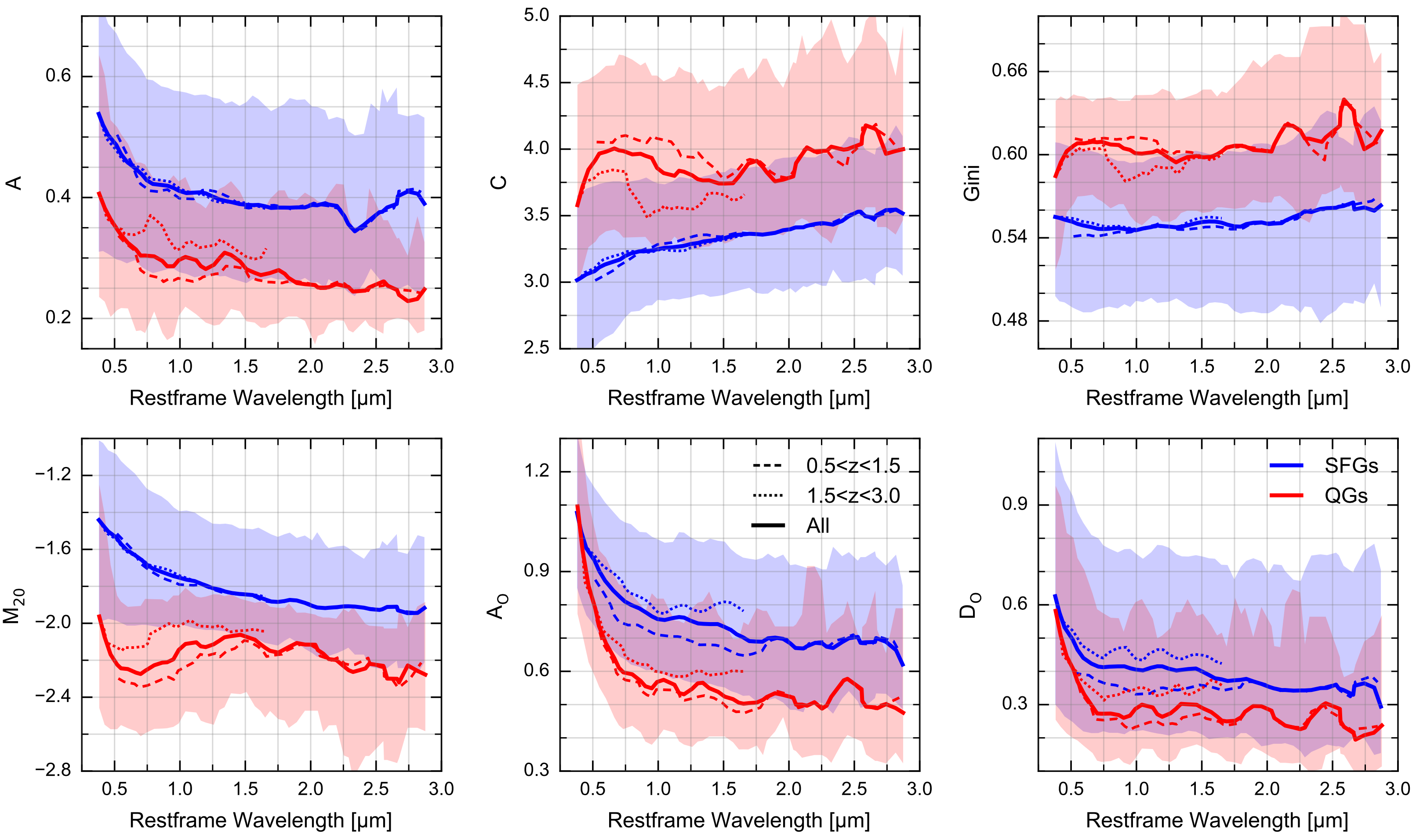
Figure 2. The restframe wavelength dependence of the observational effects corrected non-parametric morphological indicators of the JWST/CEERS and JADES galaxies. (Ren et al. 2024)
4. Precise Morphological Parameter Measurement: Achieving precise measurements of morphological parameters is challenging due to complex observational factors, including the point spread function (PSF), dust interference, and signal-to-noise ratio (SNR). Developing advanced algorithms is necessary to mitigate these effects and to extract dependable morphological data.
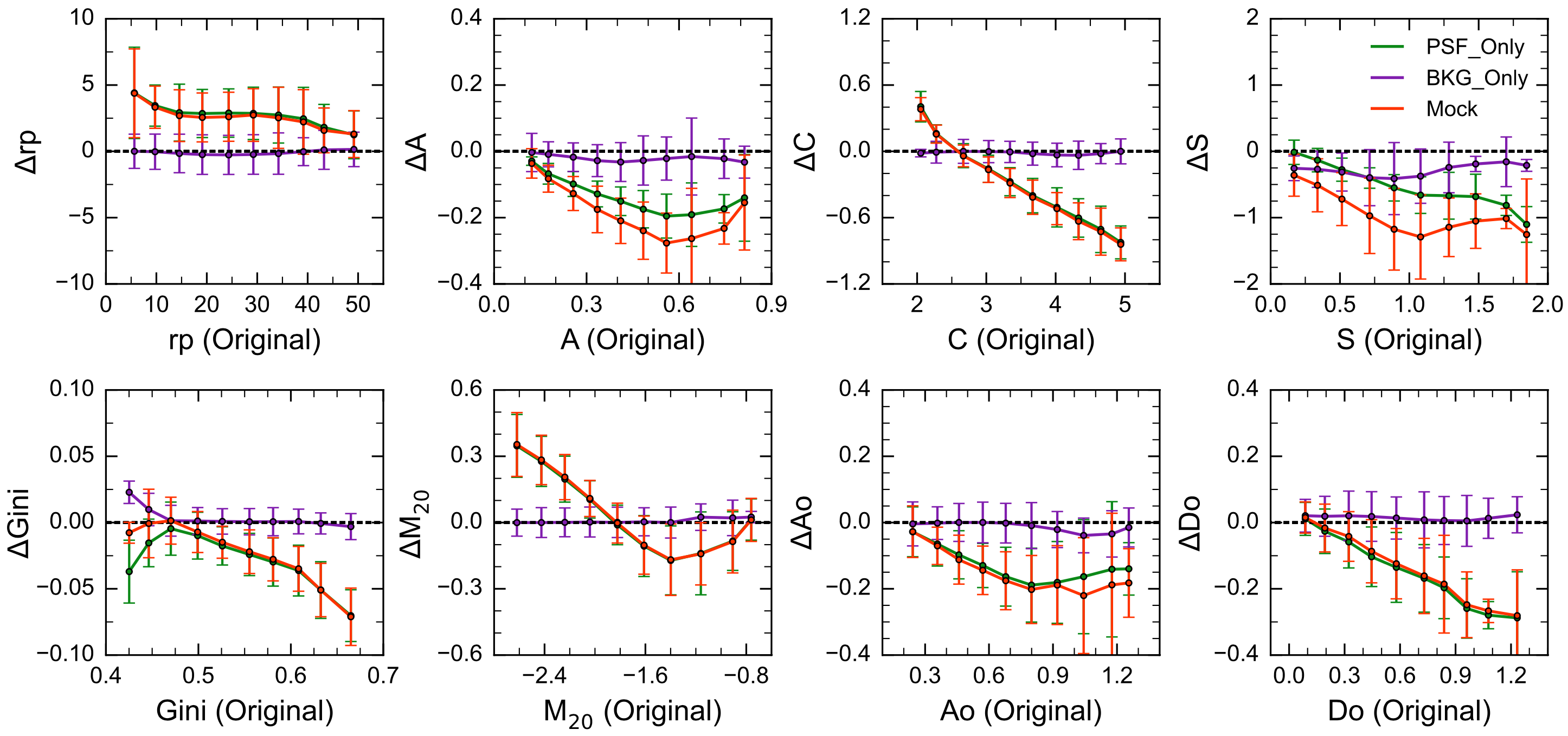
Figure 3. The deviations of non-parametric morphological indicators in the JWST observational condictions as a function of the true indicators. (Ren et al. 2024)
5. Morphological Classification: This aspect of research entails the systematic classification of galaxies based on their visual morphologies, which range from distinct spirals and ellipticals to irregular forms and other unique types. The advent of machine learning techniques has transformed this field, enabling rapid and consistent classifications at scales previously unimaginable, thus enriching our understanding of the galaxy populations across the universe.